Environmental Stewardship
Home / Sustainability /

Environmental Stewardship

OUR ASPIRATION

Zijin Gold International is committed to achieving harmonious coexistence with natural ecosystems in every operational region worldwide. We not only focus on the proper extraction and efficient use of resources but also uphold our responsibility as stewards of water resources, land, and ecosystems, and ensure the long-term safety of tailings storage facilities with strict standards. We also integrate climate resilience and circular economy principles into the entire lifecycle from exploration to mine closure, optimizing resource management and reducing waste and carbon emissions through innovative technologies.


  • Biodiversity
  • Water
  • Tailings
  • Waste, air and contamination
  • Climate change and energy
  • Emissions
 Biodiversity
Biodiversity
Biodiversity and land use are core pillars of our environmental governance, requiring strict management across every phase—from site planning and resource development to operations and ecological restoration. We adhere to international frameworks like the Convention on Biological Diversity and the Kunming-Montreal Global Biodiversity Framework, as well as local regulations. We direct all mine sites to formulate targeted policies, including Biodiversity Management Plans, Conservation Guidelines, and Wildlife Monitoring Plans. Following the "avoid, mitigate, restore, and compensate" hierarchy, we integrate conservation into the full mine life cycle to guarantee our land rehabilitation objectives are met upon closure. We strictly pledge not to operate in high-conservation-value areas, such as nature reserves and World Heritage sites, while actively promoting systematic ecological restoration wherever we operate.
Water
Water
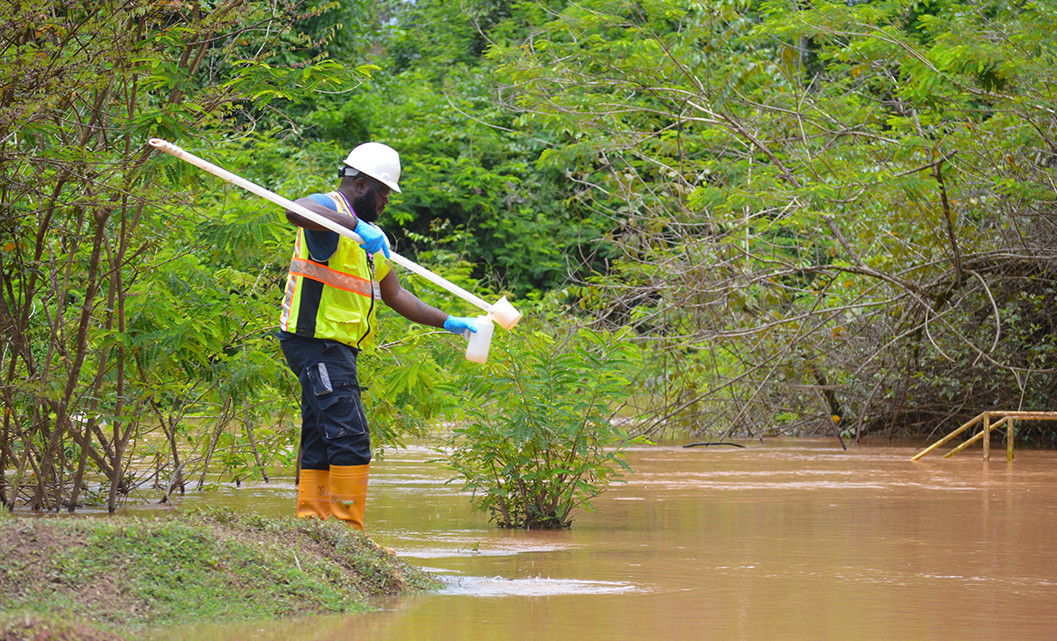
We set differentiated water management goals based on operational contexts and regional water conditions—focusing on maximizing industrial water reuse, minimizing fresh water withdrawal, optimizing circulation systems, and applying robust monitoring frameworks. This systematic approach lowers our water intensity while safeguarding aquatic ecosystems. To date, none of our mine sites has experienced significant water scarcity risks or supply pressures, maintaining reliable and stable water infrastructure. Guided by local water availability, climate profiles, and process-specific needs, each site executes tailored water management strategies. Key measures include water accounting frameworks, performance-driven mechanisms, recycling technology upgrades upgrades, water balance optimization, and smart monitoring systems.
Tailings
Tailings
We have established a comprehensive lifecycle management system for our tailings storage facilities (TSFs). Grounded in safety, environmental compliance, and operational excellence, we ensure that every facility coexists harmoniously with its surrounding ecosystem throughout its active life and post-closure, delivering on our high-standard commitments to local communities, the environment, and the future. During the Reporting Period, all of our tailings storage facilities operated stably, with zero safety anomalies, environmental leakages, or unforeseen risk events.
Waste, air and contamination
Our environmental policies cover hazardous materials, air emissions, solid waste and contamination control.
Hazardous materials: Site foundations and storage practices prevent hazardous leakage into soil. Hazardous waste is segregated in colour‑coded receptacles; explosives and cyanide packaging are removed for disposal by qualified suppliers.
Air: At processing plants, dust suppression sprays and dry dust collection systems are installed on ore crushing circuits and conveyor transfer points. In underground mining, major ventilation systems and water spraying are used for dust control.
Solid waste: Scrap steel and other clean underground waste are collected for reuse; lead batteries are recycled by accredited vendors. A waste compactor reduces landfill volumes and associated emissions, and wood, plastics and other recyclables are diverted from landfill to approved recyclers.
Noise: Operational noise is reduced through low‑noise equipment, silencers, sound‑absorbing materials and noise isolation solutions.
Targets:
General waste utilisation rate to increase by 5% by 2030 vs 2020
Hazardous waste harmless disposal rate to remain at 100%.
Climate change and energy
We have integrated a “Dual‑Carbon” commitment into our development agenda and are expanding clean energy:
Tajikistan Jilau/Taror, Colombia Buritica and Suriname Rosebel – 100% clean energy in purchased electricity (as of 30 June 2025)
Guyana Aurora – A 45 MW photovoltaic power system has been commissioned
Suriname Rosebel – 25 MW photovoltaic project under construction
We install solar, wind and hydropower facilities at mining and refining sites and focus on projects such as mine closures and tailings storage facilities to strengthen environmental protection. We enhance environmental management systems, optimise water, energy and logistics use, apply circular‑economy principles and strictly control tailings, waste, wastewater and pollutants, while increasing the share of renewable energy through own PV generation and participation in green‑energy trading.
Emissions
Emissions
A decrease in greenhouse gas emissions has been driven mainly by measures such as optimised transport routes, which reduced diesel consumption. Higher electricity use reflected increased production and was fully sourced from purchased clean energy.
Targets:
Greenhouse gas emissions per unit of industrial added value to decrease 38% by 2029 vs 2020.
Renewable energy to exceed 30% of total energy use by 2030.
Zero environmental pollution incidents, avoiding irreversible environmental damage.
We closely track regulatory and industry developments and regularly update our environmental policies and standards.